Harry Bitter
Wageningen UniversityCO2 capture and conversion – reality and dreams
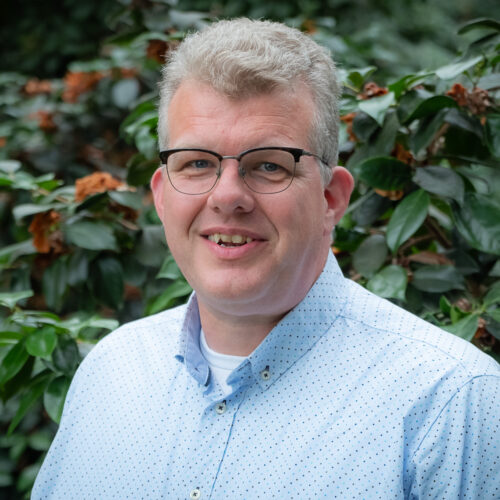
Harry Bitter studied chemistry in Nijmegen, the Netherlands, with a major in organic chemistry and a minor in organometallic chemistry. He subsequently performed his PhD research at the University of Twente in the group of Prof. Johannes Lercher (Catalytic Processes and Materials), where he worked on Pt/ZrO₂-based catalysts for the dry reforming of CH₄ with CO₂ to syngas.
After completing his PhD, Harry joined Utrecht University as a junior staff member, where he continued working in the field of heterogeneous catalysis, focusing on the use of X-ray spectroscopy in catalysis. From 1999 to 2013, he was a scientific staff member at Utrecht University in the Inorganic Chemistry and Catalysis group (led by Prof. Krijn de Jong). His research during this period focused on the use of carbon-based catalysts in both fossil feedstock conversion, biomass-based conversion and CO2 capture and conversion.
Since 2013, Harry has been a full professor at Wageningen University & Research, holding the chair of Biobased Chemistry and Technology. Within this chair, he focuses on catalytic biobased conversions, biobased soft materials and CO2 capture and conversion on multiple length scales, using a multidisciplinary approach. The main challenge is to convert biomass, which is flexible in composition, into desired products. His group combines chemical (laboratory) methods with computational approaches (from DFT to conceptual process design).
Harry has published around 210 papers, is involved in five patent applications, and teaches courses in inorganic chemistry, catalysis, and the biobased economy. In addition, he is, among other roles, technical manager of a multi million euro program on hydrogen conversion (groenvermogen-hynitrogen) and president of the Dutch Research School on Catalysis (NIOK).